Hiking Mt. Esja: Reykjavik’s Local Mountain
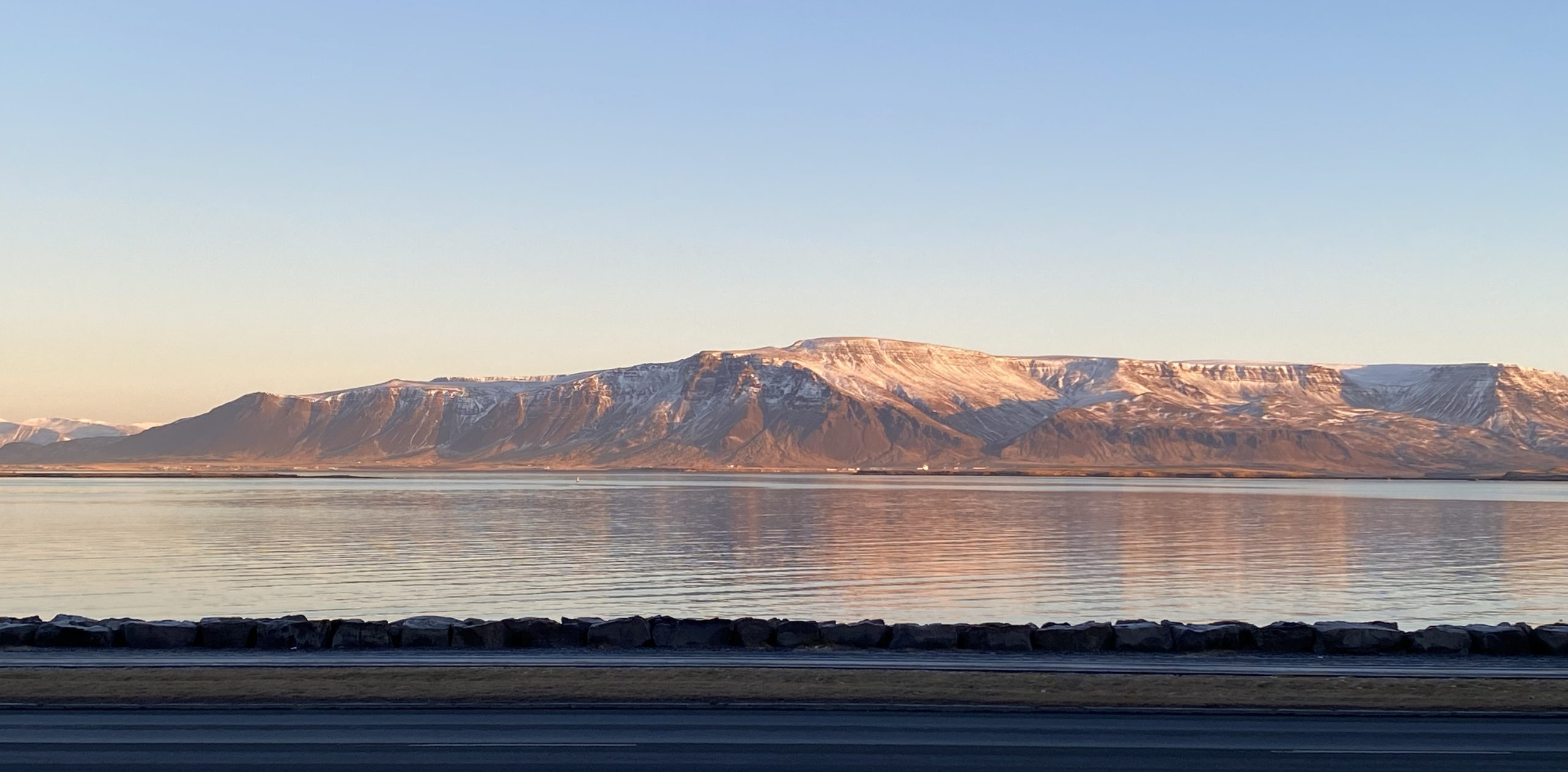
If you’ve ever looked across Reykjavík’s bay, you’ve noticed the striking silhouette of Mt. Esja dominating the northern horizon. Rising 914 meters above sea level, this iconic mountain is the most popular hiking destination near Iceland’s capital. This post will tell you everything you need to know to hike Esjan, “the Esja”.
What Makes Esja Special
Esja is technically a volcanic range composed of basalt and tuff, formed over millions of years.
The name “Esja” is one of the few feminine mountain names in Iceland. The locals speak of their beloved peak with genuine affection, referring to it as “Esjan”, “the Esja”.
More than just a backdrop, Esja is the heart of hiking around Reykjavik. And not only that.
Some Reykjavik residents go there weekly for exercise: hiking, running, and biking. Others mostly enjoy watching from their windows—the Esjan view is a prized property feature. Some people even use Esja to predict the weather, judging by how much snow or fog there is on the mountain.
Each year, the Esja Ultra trail run draws athletes from around the world, with distances ranging from 14 kilometers to a 77-kilometer ultra-marathon.
Planning Your Visit
Getting There
Mt. Esja sits approximately 10 kilometers northeast of Reykjavík, just past Mosfellsbær along Route 1. The drive takes about 20 minutes from downtown, and you’ll find a free, well-signposted parking area at the trailhead.
If you don’t have a car, you can take the public bus. Take bus number 57 runs from Mjódd bus station in Reykjavík and takes about 30 minutes.
Although the actual bus stop is a 30-minute walk away from Esjan, you can just tell the bus driver you’re going there and they’d usually drop you off near the parking lot. However, to catch the bus back, you’d need to walk to the bus stop.
Check the Strætó schedule in advance, as service times vary.
When to Go
The ideal hiking season runs from May through September, with summer months (June to August) offering the best conditions. It’s also the busiest season on one of the busiest hikes in Iceland

During this period, temperatures hover between 10-15°C. The hiking trails are typically dry. And Iceland’s long daylight means you can start a hike in the evening and still have hours of light ahead of you.
Spring hiking in May can be rewarding. But expect muddy trails and possible snow at higher elevations.
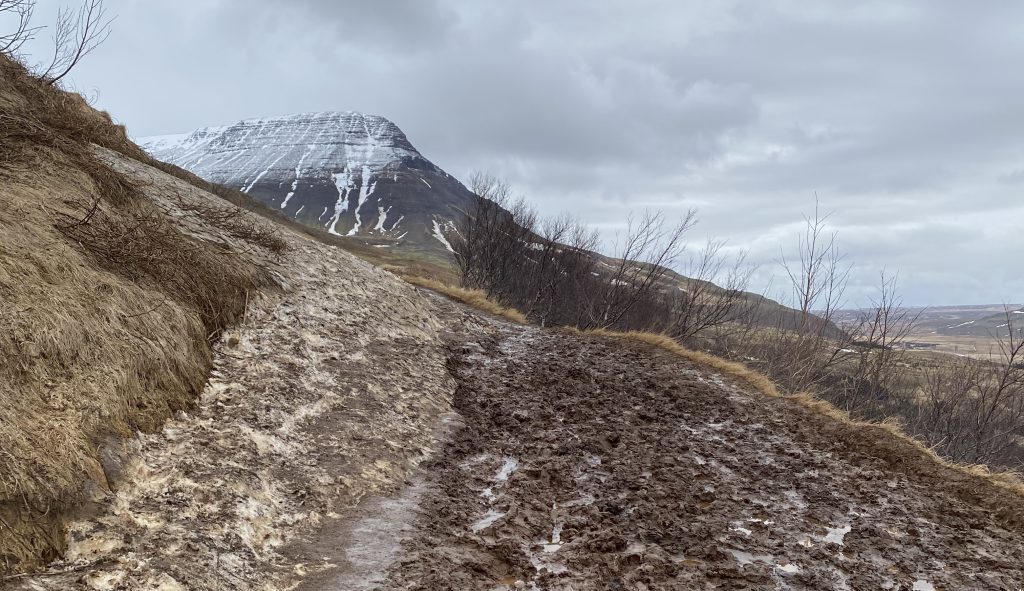
Early autumn brings cooler temperatures and shorter days. But the crisp air and warm seasonal colors create their own magic. It’s a good idea to take some spikes with you as there could be ice at the higher parts of the trail.
Winter hiking (late October through April) is another matter entirely.
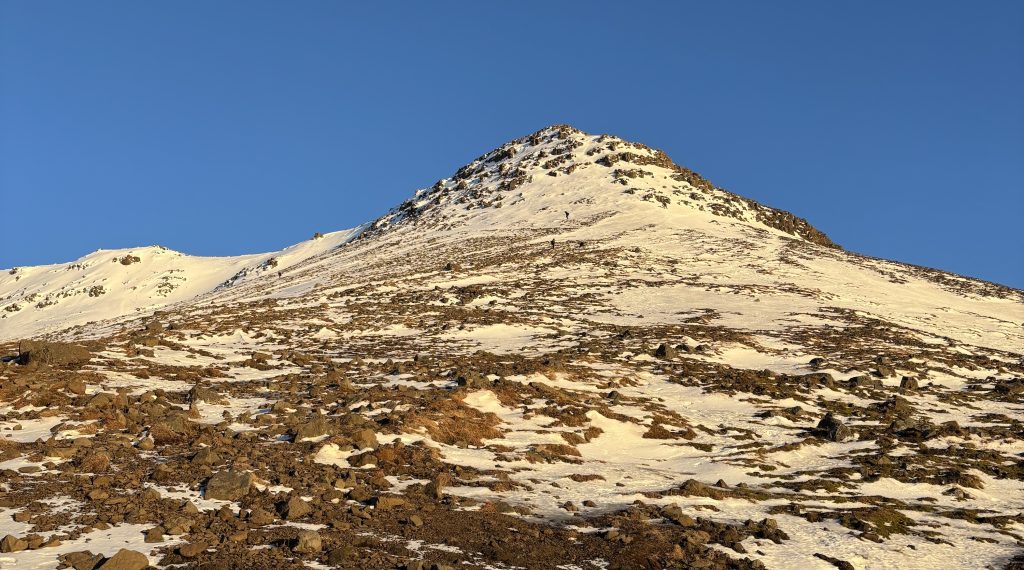
Snow and ice transform the mountain into a more serious undertaking. The Iceland Touring Association notes that Esja sees more hiking accidents than any other location in the country—largely due to winter conditions, fog, and hikers pushing beyond their experience level.
If you do venture up during winter months, crampons and proper ice-hiking experience are essential. Most people also wisely limit themselves to the lower sections of the trail.
The Trail System
Esja’s hiking trail network is well-organized and clearly marked, using a color-coded system.
The trails begin at the parking area near Esjustofa (the now closed cafe / hut) and fan out across the mountain.
The Forest Trails
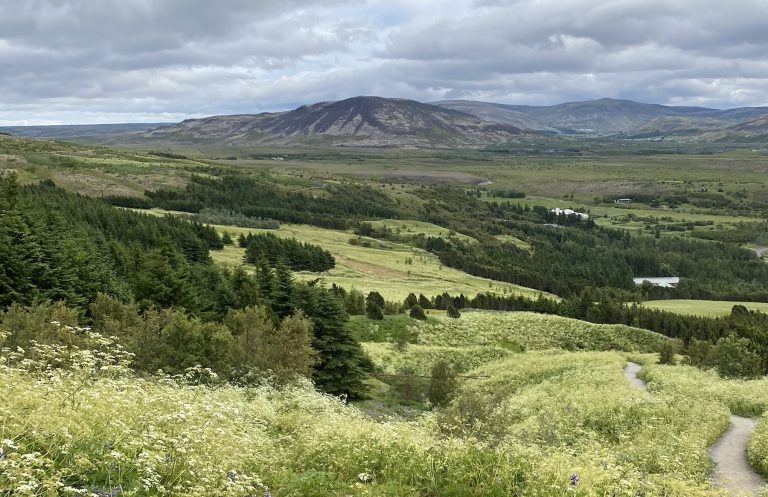
For those seeking a gentler experience, several shorter forest trails wind through the lower slopes.
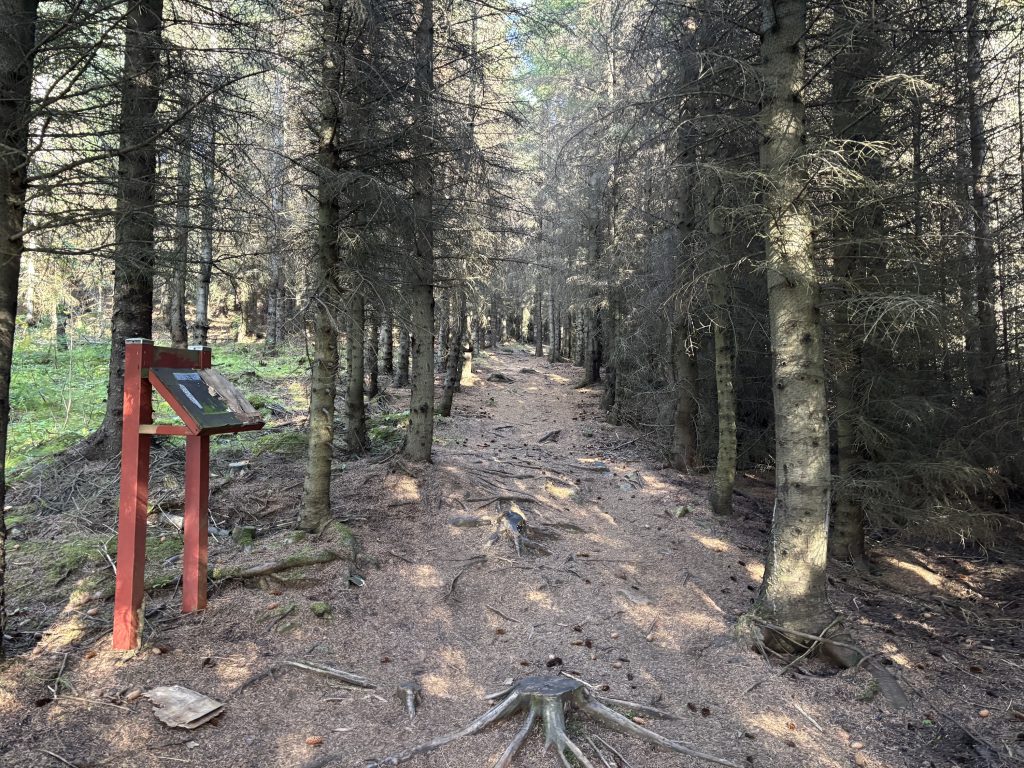
These paths, typically taking 20-30 minutes each, go through wildflower meadows and patches of pine, offering views up toward the towering peak above. While there aren’t any panoramic city views of the higher sections, these trails showcase a different, equally beautiful aspect of Icelandic nature.
The trails interconnect, so you can combine them into a longer loop if you’re feeling adventurous.
The Route to Steinn
The most popular hiking objective on Esja is reaching Steinn—”The Stone”.
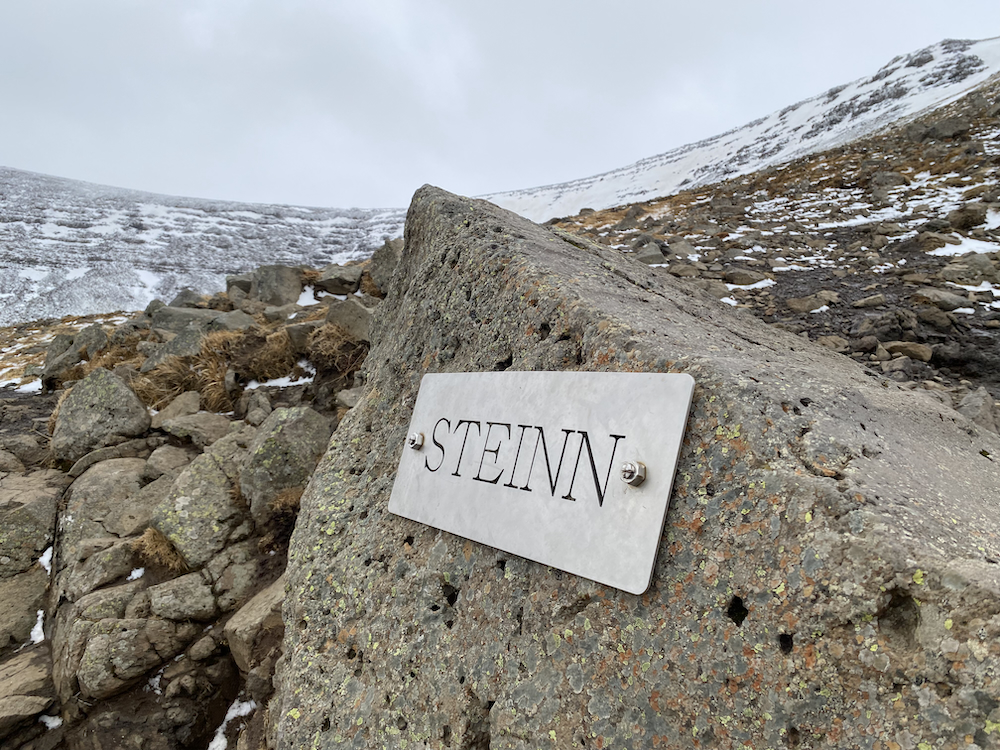
Steinn is a large, distinctive rock with a sign saying “Steinn”. It marks a natural resting point about 600-780 meters up the mountain. Most hikers take between one and two hours to reach it, following well-maintained paths that climb steadily but manageably from the trailhead.
After a short initial walk, you’ll reach a junction where the trail splits. Both paths eventually lead to Steinn and aren’t too different in difficulty or exposure. The only somewhat exposed parts are towards the higher trail sections, where you need to be sure-footed.
The whole trail is well-trodden and marked with signs at key parts. Also, you’ll rarely find yourself alone on the trail—fellow hikers are usually happy to point you in the right direction if you’re uncertain.
At Steinn itself, you’ll find a metal box containing a notebook where hikers leave messages and memories. The views from here are spectacular, looking back across Faxaflói Bay toward Reykjavík and out to the surrounding mountains and fjords.
For many visitors, this is the perfect destination. It’s challenging enough to feel like an achievement and is accessible enough that most reasonably fit hikers can manage it.
Beyond Steinn: The Summit Routes
For experienced hikers seeking more challenge, the mountain continues above Steinn.

To get to the summit, Þverfellshorn, you need to scramble steeper and rockier terrain. Some sections feature chains bolted to the rock for assistance. The path becomes less distinct in places, and the exposure increases considerably.
A secondary route to the top leads on the right-hand side of the mountain. It is steep, exposed, and the trail isn’t marked. I took it just once and wouldn’t recommend it… And if you do, it could be a good idea to submit a travel plan just in case.
The true highest point, Hábunga (914 meters), requires an additional three-kilometer trek along the ridge from Þverfellshorn. There is no trail and you walk on large, loose rocks, and navigate by cairns (or a GPS).
The upper sections should only be attempted in good weather conditions. Before the hike,m always check Vedur.is for any warnings.
If clouds roll in while you’re above Steinn, turning back is the wise choice. Visibility can drop quickly, and the terrain becomes genuinely hazardous when you can’t see where you’re going.
What to Pack
The gear list for Esjan depends on how high you want to go.
The lowest sections in the woods are like a walk in the park. Any shoes and jackets would do.
The hike to Steinn is more demanding but can be done without hiking boots. Many people do it in trail sneakers and with minimal rain gear. In fact, in any time of the year you can meet some Icelanders trail running in shorts and just a thin windbreaker… even if it’s freezing cold.
Don’t attempt to copy them. Have some extra layers in case you’d have to walk slower. Prepare like for a long day hike.
Finally, the upper sections beyond Steinn require some mountaineering boots. Without them, you might struggle to get the foothold during the part with the chains where you need to scramble. And walking on the loose rocks at the top you risk twisting an ankle if you don’t have decent ankle support.
Trail Etiquette and Safety
Esja’s trails see heavy use, so practicing good trail etiquette helps everyone enjoy the experience.
Stick to marked paths to protect the fragile vegetation, carry out everything you bring in, and yield to hikers heading uphill on narrow sections.
Safety deserves serious attention here. Always tell someone your hiking plans, carry a charged mobile phone, and don’t hesitate to turn back if conditions deteriorate. The weather can shift dramatically as you climb, and what seemed like a beautiful day at the trailhead may become an entirely different situation a few hundred meters up.
Pay attention to the difficulty ratings on trail signs and be honest about your own fitness and experience level.
Why Esja Belongs on Your Iceland Itinerary
Mt. Esja is an authentic Icelandic mountain experience just minutes from the capital.
It’s the hike you can discuss with any Reykjavik resident who has any interest in the mountains. It can also be a point of reference for discussing how challenging any particular hike in Iceland is.
Finally, the accessibility and unforgettable views of Reykjavík make it easy to understand why this volcanic range holds such a special place in Icelandic hearts.